From Japan to Southeast Asia — Vpon and Tagtoo Combine Data Assets from 900 Million Unique Mobile Devices with AI-Driven Ad Optimization Technology to Build Asia’s Most Comprehensive One-Stop Cross-Border Marketing Platform
As the global economy becomes increasingly data-driven, Data Exchange Platforms (DXPs) are emerging as a critical foundation for inter-enterprise data sharing and collaboration. According to an analysis by MRFR, the market size of DXP services reached approximately $6.07 billion in 2022 and is expected to expand rapidly with a compound annual growth rate (CAGR) of 17.91% from 2024 to 2032. Meanwhile, Retail Media Networks (RMNs) have quickly gained traction as a new favorite in the media landscape. How do these two intersect? Additionally, what role does the less-discussed Data Clean Room (DCR) play in this ecosystem? This article explores the current market landscape from a DXP perspective, providing a detailed analysis and comparison of DXP, RMN, and DCR.
In today’s data-driven era, data exchange platforms are becoming crucial tools for enhancing competitiveness across industries. By promoting data sharing, strengthening cross-departmental collaboration, and driving innovation, these platforms bring greater efficiency and deeper industry insights to sectors such as finance, healthcare, and manufacturing. This maximizes the utilization of data resources and accelerates smart decision-making.
Data exchange platforms play a crucial role in helping brand marketing in today's digital age, addressing fierce market competition and evolving consumer demands. Here are four key ways data exchange platforms can assist brand marketing:
Apple recently released a new ad focusing on browser privacy, specifically targeting non-Safari browsers (such as Chrome) for their lower privacy levels. The ad boldly states, "Your browsing is being monitored," and claims Safari is "the most private browser you can find." This not only represents a declaration of privacy innovation for the entire browser market but also challenges Google directly.
Third-party cookies have long been an essential tool for brands to collect and analyze user data, enabling them to track user behavior and preferences, allowing for more targeted marketing campaigns. Although Google announced on July 22, 2024, that it would no longer phase out third-party cookies, the new option allowing users to decide whether to be tracked by third-party cookies will still impact the volume of data collected. For reference, Apple's 2019 release of Intelligent Tracking Prevention (ITP) 2.3 in Safari, which lets users choose whether to accept cookies, led to data showing that only 32% of users in the U.S. accepted cookies, according to a June 2021 Statista survey. This trend has made it increasingly difficult to track user behavior across sites, leading to a decline in personalized marketing based on cookie data. As a result, integrating first-party data with second- and third-party data has become a key strategy to maintain data accuracy and marketing effectiveness.
On July 22, Google announced that it would abandon its plan to phase out third-party cookies in Chrome, instead proposing an alternative approach. This new approach allows users to make informed choices about their web browsing and to adjust those choices at any time. This policy shift was revealed by Anthony Chavez, Vice President of Privacy Sandbox, in a blog post. He also emphasized that "it is still important for developers to have privacy-preserving alternatives, so we will continue to provide and invest in the Privacy Sandbox API to further enhance privacy and usability."
On July 22, 2024, Google announced in a Privacy Sandbox blog post that after years of consideration, it has decided not to phase out third-party cookies. This announcement marks an official declaration after three delays since Google first announced plans to eliminate third-party cookies in 2020. Instead, Google plans to give users the option to choose whether to be tracked by third-party cookies in Chrome, allowing them to enhance their browsing experience and giving users the ability to adjust their tracking preferences at any time. Google will continue to invest in its Privacy Sandbox to address user privacy concerns.
The internet era has given rise to a new generation of fashionable moms, where the sharing of parenting knowledge extends beyond casual conversations to form online discussion communities. This transformation has led to the emergence of parenting community platforms, providing spaces not only for sharing experiences and seeking support but also serving as bridges to establish strong connections among moms. The data partner we are introducing today is the most mainstream mother-infant parenting community platform.
Picture this: Your online advertising strategy becomes a tailor-made suit, impeccably fitted to each potential customer. How? We're diving headfirst into the world of personalizing ad experiences, where we seamlessly integrate AI systems into the mix. It's not just about reaching your audience; it's about doing so efficiently, saving those precious marketing dollars while cranking up the effectiveness of your campaigns.
In exploring consumer behavior, abundant behavioral data plays a crucial role in helping us gain a deeper understanding of consumer behavior patterns. In addition to having reliable and effective data sources, the ability to integrate and analyze data is equally critical to accurately describing the process consumers go through before making a purchase decision.
In the rapidly evolving field of technology, where machine learning algorithms play a crucial role in driving business growth, the importance of data labeling cannot be overstated. Data labeling, a process of assigning predefined tags or annotations to data for training machine learning models, holds the key to unlocking the true potential of AI-driven solutions.
What is second-party data? Second-party data refers to data obtained not from one's own company but from a collaborating business entity. In other words, the data was data acquired from a partner company. For instance, when two companies have data sharing and exchange agreements, they collaborate mutually. Through this cooperative approach, Company A can provide the audience data it collects to Company B, making this data classified as second-party data for Company B.
Data is highly valuable for businesses as it provides objective insights to facilitate informed decision-making. However, large enterprises confront the challenge of managing and harnessing the influx of vast amounts of data. In this context, the concept of a "data lake" has emerged as a solution, offering businesses a flexible, scalable, and powerful data architecture. This article delves into what a data lake is and how it assists enterprises in achieving their objectives.
In the context of consumer behavior analysis, having consistent shopping behavior data is a crucial key to understanding consumer behavior. In addition to possessing robust data integration and analytical capabilities, gaining insight into the process leading up to consumer shopping decisions requires reliable and effective sources of data.
Nowadays, regardless of income level or age, people's awareness of investment and financial management is on the rise. The data partners we are introducing today play a crucial role in this field, leading the wave of financial revolution. Tagtoo's Data Partner Program aims to harness the power of numerous enterprises, enabling data sharing and providing deeper insights into their operations. In this spotlight, we proudly present one of our esteemed data partners: CMoney.
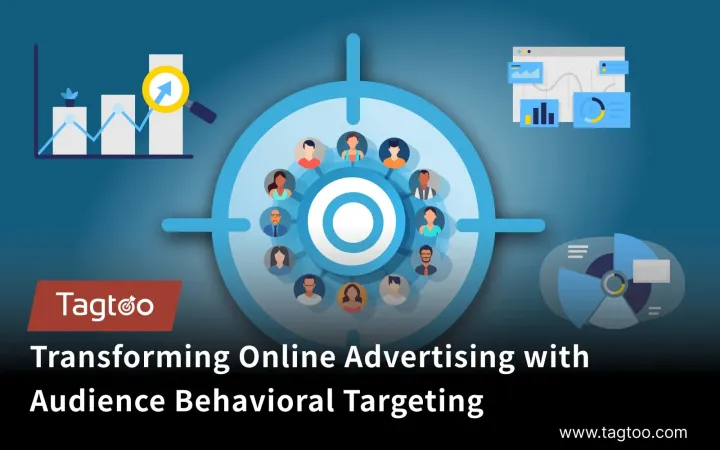
You have an online shop, you also have an ad budget. But how do you target the most potential customers, to make sure that you have maximized your budget? Behavioral targeting is a way to segment and measure which audiences that are most likely to purchase your products, to deliver targeted advertisements and personalized content.
Customer data has become a critical asset for businesses. To effectively utilize this data for marketing strategies, Tagtoo LTA (Label Target Audience) can help you solve data application challenges.
When brand owners advertise on Facebook, they often face a dilemma of limited audience selection options available within the FB backend. They fear that choosing unrelated audiences may result in targeting the wrong target audience. However, at times, selecting audiences with very similar interests can lead to significant overlap, depleting the advertising budget. The introduction of the Tagtoo LTA aims to address this issue by enabling brand advertisers to discover a wider range of potential new customers for their product advertisements. LTA allows you to break free from the constraints of relying solely on the audience options provided by the FB backend.
The emergence of machine learning models is primarily aimed at helping humans solve many problems in their lives and even discovering new insights from data. Training models require a significant amount of data to be inputted. However, collecting real-life data on behavior is becoming increasingly challenging as privacy concerns increase. Therefore, the assistance of synthetic data is necessary to obtain more data for training and improve the accuracy of the models. Experts estimate that by 2024, up to 60% of the training data will be synthetic, and by 2030, the majority of the training data will be synthetic. This highlights the importance of synthetic data in the future.
For marketers, it is necessary to have a certain understanding of the brand in order to develop effective marketing strategies. However, relying on manual methods to uncover useful insights about the brand requires the assistance of professional analysts to complete the task. With advancements in technology, many tools that are highly beneficial for marketing have emerged, collectively known as MarTech, which stands for Marketing Technology. MarTech allows business owners and marketers to have access to more resources that can assist them, enabling them to quickly find solutions when needed.
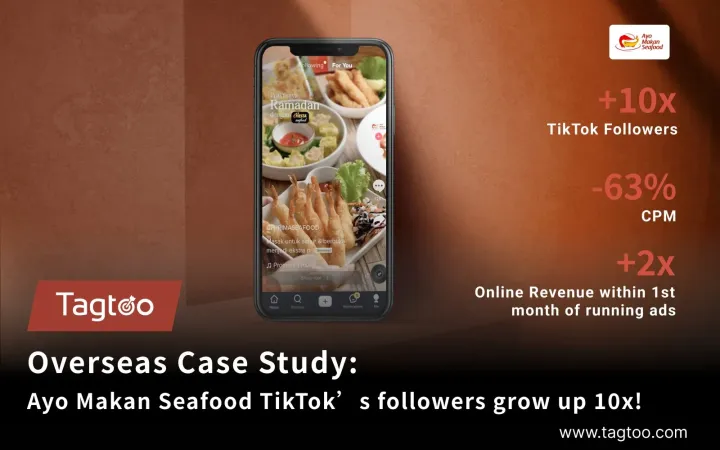
Our Client_Ayo Makan Seafood Ayo Makan Seafood is a company that produces various frozen seafood brands, including Fiesta Seafood, Champ, Shifudo, Frosh & Golden Seafood.
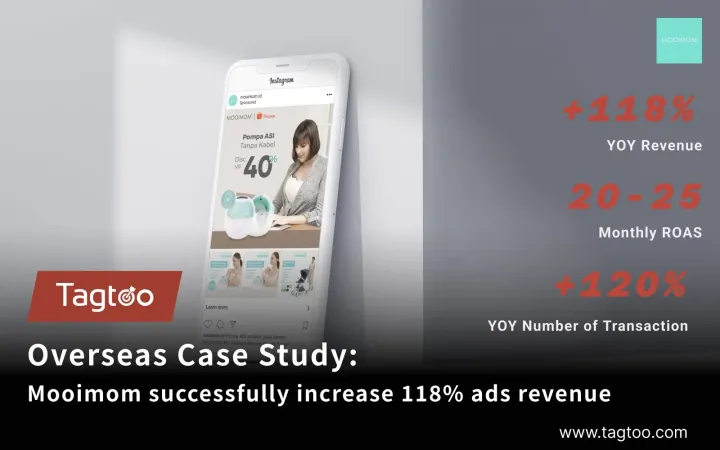
Our Client_Mooimom Indonesia A maternity brand that have offline and online stores in Indonesia. Tagtoo have closely work with client for 3+ years for ads performance and successfully achieved client’s KPI.
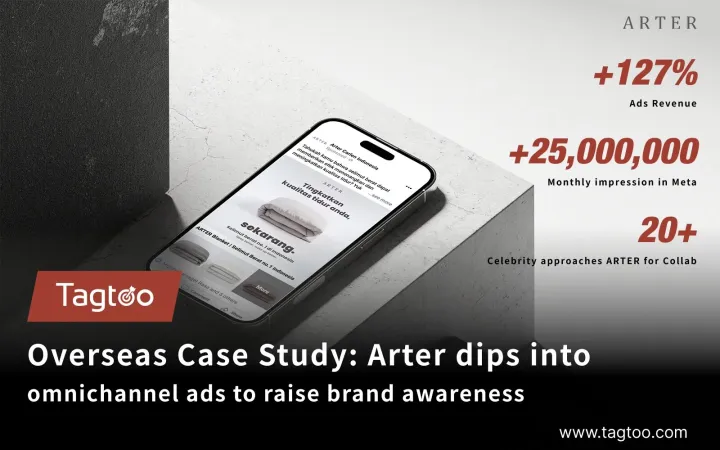
Our Client_Arter Blanket A weighted-blanket that benefits on sleeping quality. Arter has been Tagtoo’s client right from the birth of the brand and have successfully maintain a sustainable partnership with client.
50% FIFTY PERCENT is a chain fashion brand with over 30 branches throughout Taiwan. The brand adheres to the concept of "high-quality products at reasonable prices" and is deeply loved by the average Taiwanese consumer, allowing them to enjoy a high-quality clothing experience at the most affordable prices possible.
Data is information that is collected and analyzed to understand customer behavior, preferences, and interests. This data can come from a variety of sources, such as customer interactions with a business's website or app, purchase history, and demographic information. When a business has access to this data, it can use it to target specific audiences and personalize marketing messages.
In recent years, terms such as Data Science, Big Data, and AI artificial intelligence have been highly utilized, but do you know how to effectively use them as a brand owner to help improve your business performance?
Starting on July 1, 2023, Google Analytics 4 will be fully replaced by UA. If you are still unfamiliar with this new data analysis tool, this article will step by step introduce the GA4 report, to help you get reacquainted with it.
Our Client_ChizUP! Founded in October 2015, Taiwan's leading American style cheesecake store. A dessert chef, a designer and a marketing publicist, three men with different careers but similar tastes, discussed "the best cheesecake" at a gathering where the spark of ChizUP! was born.
The human brain produces intelligence through the connection of millions of neurons. Can machines also mimic the structure of the human brain to produce their own intelligence for learning and operation?
Did you know that SEM (Search Engine Marketing), a common marketing method used by marketers, can also be optimized with natural language processing (NLP) technology? We once helped a women's footwear e-commerce company to operate Google Search Ads with Tagtoo’s "AI Keyword" solution, and successfully increased the website’s traffic by 60%, bringing more new customers to the brand.
With privacy awareness on the rise, third-party cookies have been gradually phased out of the market. But without cookies to track consumer behavior data, how can marketers continue to understand consumer needs and provide a personalized experience? Fortunately, dozens of the cookieless solutions have been rolled out, helping to go down the impact of third-party cookies.
Deep Learning is a subset of Machine Learning, which is also known as artificial neural networks(ANNs), it is an algorithm inspired by the structure of human’s brain. To explain "deep learning" in a simple way, it is to find out a function to solve a very specific problem. Due to the complexity of the function, we can’t find out on our own, that’s the reason we need Deep Learning to help humans solve the problem.
Netflix and YouTube’s personalized video recommendations algorithm, AlphaGo and automated driving, all of these are AI technology. In the process of understanding the field of AI, you would often see the terms"Machine Learning" and "Deep Learning". So what do they really mean? What are their connections with AI? Let's find out!
Starting July 1, 2023, Google will eliminate Universal Analytics (UA, the previous generation of Analytics) and replace it with GA4, which means that next year UA will be completely replaced by the new generation of GA4. This will be a huge change for marketers who are familiar with UA's analytics features and interface.
Since Safari took the lead in boycotting third-party cookies, Firefox and Edge have followed, and even Chrome, which has the highest market share of browsers, has publicly stated that it will end third-party cookies by 2023.
TikTok marketing has become a hot topic in recent years, brands are trying to get exposure on this new advertising platform. How did TikTok manage to get so much traffic? This article will explore the reasons behind it.
When it comes to generating leads, there may be two ways that pop to your mind. One is to collect leads through Facebook lead ads, the other is to drive users to a landing page and fill out a form...
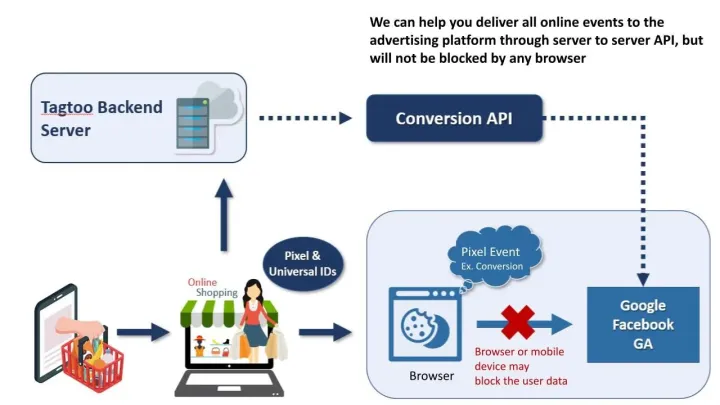
Tagtoo has up to 80% of clients who are vertical E-businesses, and we have successfully assisted our clients to complete the setting process. Today, Tagtoo has organized the complicated process and will show you the important steps to set up AEM and Server to Server API.
Search Engine Marketing (SEM) has been an important marketing tool since people nowadays deeply rely on search engines. If managing SEM well and your ads appear when people are doing product searches, it will be likely to affect their buying decisions.
Collaborative ads, which is also known as Collaborative Performance Advertising Solutions (CPAS) is an advertising solution that Facebook offered brands to collaborate with retailers on dynamic advertising campaigns. Brands can create dynamic ads easily with the retailer’s product catalogs, and directly drive sales to online retailers and marketplaces such as Shopee and Lazada.
In 2020 and 2021, two important announcements significantly impact the digital marketing world. In 2020, Google announced that Chrome will start to restrict third-party cookies. And in 2021, Apple conducted the new version of iOS 14 which enhances the protection of user’s privacy. Suddenly, the whole digital advertising world was descending into chaos. Some people start to question whether digital advertising marketers can still track down the user’s digital footprints in the future.
Due to the Covid-19 pandemic, the move from offline to online has taken off faster than expected. Today, 85% of people worldwide are now shopping online. Among all the countries, we can keep an eye on the digital economy development of Southeast Asia.
Tagtoo is a leading Dynamic Product Ads (DPA) platform in Asia, providing the best online ads experience for both advertisers and the audience. With over 10 years of experience, Tagtoo’s solutions have assisted thousands of e-commerce businesses to get the most return on investment. Most importantly, the effectiveness is also proven by markets in Southeast Asia and Taiwan.
Digital advertising in Indonesia is growing rapidly. 2019 Global Digital Ad Trends Report not only predicted that Indonesia’s digital advertising spend would reach US$ 2.6 billion in 2019 but also pointed out its amazing growth rate, 26%, dwarfed other ASEAN countries such as Thailand.
Startup life is full of twists and turns. One moment a startup is making a huge breakthrough, the next moment the team might be collapsing from the peak due to many possible causes such as management, investor, and etc.
With high penetration of Internet, cellphone, and credit card, and well-established infrastructure, Taiwan is a mature and ideal market for field-testing of the new business model.
The golden age of the traffic dividend has almost come to an end. Most brands will be facing the growth stagnation of website traffic soon. Meanwhile, as Internet giants like Tokopeida and Shopee in Indonesia dominate the major traffic source, the competition is becoming increasingly adverse and unreasonably expensive.
Southeast Asia is the fastest growing region of the gaming industry in the world. Increasing internet penetration and rising disposable income give rise to the rapid development of mobile games. Mobile games undoubtedly will soon become the next fierce battlefield.
Performance advertising refers to an advanced pricing plan where advertisers pay only when there are measurable results. This new type of advertising takes paid traffic into another level by guaranteeing the success and taking the risks of profit loss. The result is obvious and comes fast.
It’s understandable that a company has a limited budget for paid traffic. The cost is soaring at an incredible pace. However, under no circumstance have not a company apply viral marketing to acquire traffic. The comprehensive and logical tips to carry out viral marketing campaigns have been discovered early on and implemented extensively.
Traffic monetizing is not as easy as it was. The golden age of traffic dividend has almost come to an end. Most brands will be facing the growth stagnation of website traffic soon in the future.
The year 2018 has almost come to an end. It is a year full of twists and turns for Tagtoo. We stumbled along, almost failing but never giving up. Finally, after working hard, we got a grasp on how we could make a breakthrough in Indonesia.
Tagtoo, a Taiwan-based digital advertising agency, won “Shopping Innovation” in 2018 Google Premier Partner Awards in Greater China region. Tagtoo successfully stood out by defeating international agencies and local players. It makes one of the important milestones for Taiwan digital advertising scene.
Recently, the company I’m working for- Tagtoo, was granted Indonesia Best Brand Awards 2018 by CMO Asia, a prestigious marketing community in Asia, at the 27th World Brand Congress in Jakarta Indonesia.
Tagtoo, a Taiwan-based performance marketing platform, was granted Indonesia Best Brand Awards 2018 by CMO Asia, a prestigious marketing community in Asia, at 27th World Brand Congress in Jakarta Indonesia.
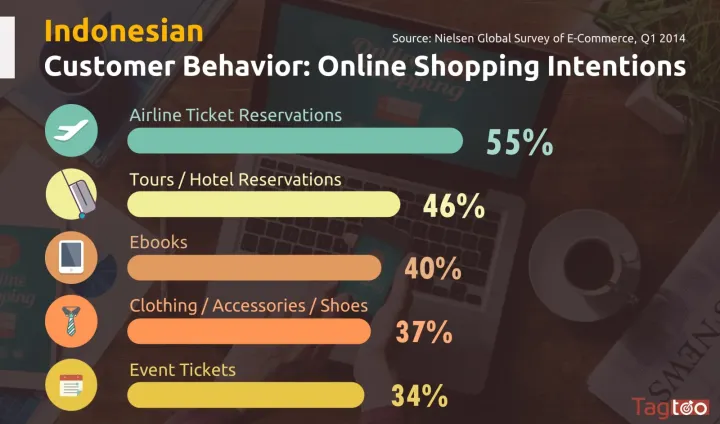
Indonesia is an exciting market. The demographic composition has great economic potential. The large and young population as well as the growing consuming power of the middle class make this archipelagic state a perfect market to enter and start their startup adventure.
Jakarta, Indonesia: On 23 October, Tagtoo will be launching AdChief, a total solution platform for dynamic product ads in major advertising networks, such as Yahoo, Google, and Facebook, at Tech in Asia Jakarta 2018.
On October 17 2018, Tagtoo will be launching Tagtoo Dynamic Product Ads Platform, presenting the hands-on experience of 8 years on digital advertising, and debunking the popular myths on choosing online marketplaces exclusively with e2eCommerce participants.
As a merchant, choosing marketplaces as your first stop to sell products is an intuitive decision. The easy-to-use and well-organized functions, such as payment systems and logistics delivery, make marketplaces appealing and irresistible to most entrepreneurs.
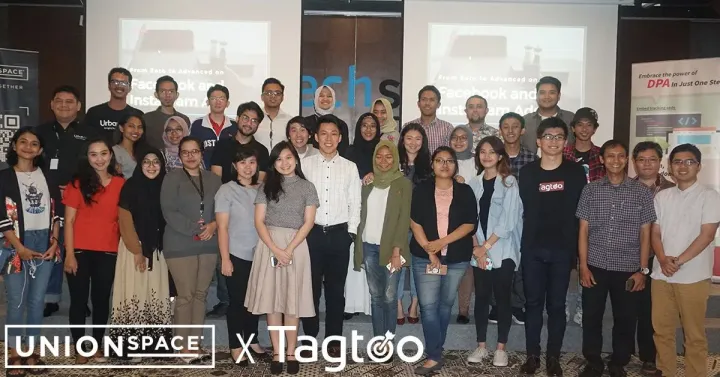
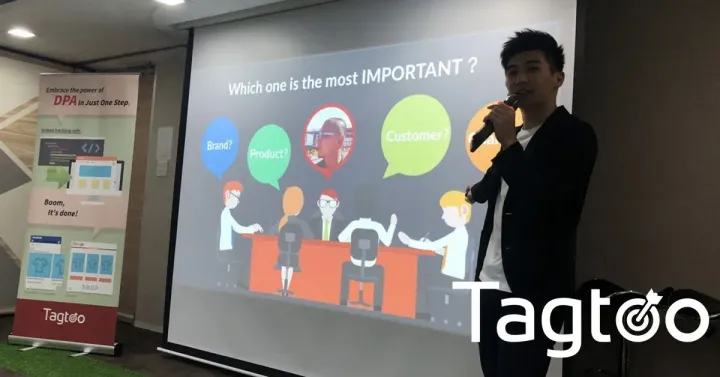
Following the previous Google Analytics workshop, Tagtoo collaborated with UnionSPACE and IDEC in September to present Tagtoo’s secret recipe for Facebook Ads and host an intense workshop for startups community and company representatives.
Entrepreneurs who just start their first few advertising campaigns oftentimes have a misunderstanding about digital marketing —expect substantial results and significant changes in their business immediately.
From the general introduction of digital marketing to the advanced methodology of driving transactions, Tagtoo invited senior marketing experts and a Facebook speaker to share their hands-on experience on Indonesian user behavior and help conquer Indonesia market.
Launching off the first ever digital marketing workshop in the middle of July, Taiwan-based performance marketing agency Tagtoo collaborated with UnionSpace, a leading regional co-working space across Southeast Asia, to help Indonesian entrepreneurs and startups founders have a deeper understanding of business analytics and online advertising.
As one of the selected Asia Top 100 startups, Tagtoo is humble and honored to attend Echelon Asia Summit with other excellent startup founders and serial entrepreneurs. The two-day event is like a sweet memory that remains vivid in our mind even though the event is finished.
Hi folks, we are extremely thrilled to announce that Tagtoo is featured among the Top 100 Asia Startup in Echelon Asia Summit. It comes with no ease but indeed shows our team’s incredible strength and resilience toward the challenges we’ve overcome in the past. Well appreciated your trust and choice.
Dynamic Product Ads (DPA) is an ad format that’s proven to be effective to boost sales because it can showcase products that instantly catches visitors’ attention. Its power has been widely recognized.
In this April, Tagtoo and Google organized an event that talks about common misconception on digital ads and shares several tips on managing Google AdWords in Kuala Lumpur Malaysia. The sharing was presented by two speakers: Max Tsai, Taiwan Market Manager of Google, and JC Chang, Media Director of Tagtoo. Below is the highlight of their precious sharing.
Tagtoo, a digital advertising company backed by AppWorks Ventures, announced the expansion plan to Indonesia in Taiwan Expo 2018 In Indonesia and is reported to cooperate with EV-HIVE, one of the leading co-working space in Jakarta, to serve local e-commerce.
Being able to accurately and swiftly identify the cause of dipping conversion on Facebook Ad is the core to maintain stable conversion rate. While some of the troubleshooting tips may require deep knowledge of ads optimization and years of experience, most of the problems causing conversion to plummet can be boiled down to five common themes listed following.
“E-commerce Adventure: how to stand out in Southeast Asia” is a book that is 35 pages long, consisting of an entire year's observation and practical experience in Southeast Asian e-commerce.
While there is a great number of online resources about Facebook Ads available, most lectures only focus on specific approaches one should follow to repeat the success instead of offering a more broad and general idea of individual’s optimization experiences.
With the huge potential of AI being proven during Google DeepMind Challenge Match where a computer program beat the best Go player in Korea, AI is suddenly one of the hottest topics and believed to be the critical element in the next industrial revolution.
While dating apps was first introduced to Asia a few years ago, they have fundamentally changed the ways Millennials and Generation Z make friends. More and more that feature appealing functions of interaction spring up in an ever-faster pace.
In the past, subscription e-commerce seems to be exclusive to a select few. Netflix and Amazon Prime, for instance, are the two of the most notable pioneers in this concept. Their backup of tons of resources accumulated in the past decades smoothly assisted in transitioning to this business model.
There is a growing trend in media and press that only talk about the bright side of startups. They love covering the romanticism of the start, new milestone of expansion, or latest fundraising round. The finish is also the eye-catching topic with merger and acquisition deal( M&A), initial public offering( IPO), and bankruptcy frequently hitting headlines. As a result, the majority of the coverage attract thousands of, or even more, young enthusiasts to join the startup scene that is challenging and unpredicted.
Looking for the Mr/Ms. Right is hard. The complicated process requires favorable climatic geographical and, the most importantly, human conditions. The process also takes a series of stages. To the vast majority, it seems that one can only meet the aforementioned by praying for God and relying on the sheer luck.
It has already been more than a year since Facebook Live was launched. The coming of live streaming doesn’t merely mean a new feature for celebrities or journalists to engage with their fans or followers. It actually creates an opportunity for people who desire to become influential and make an impact on their online community.
Although there were twists and turns in the development of DSP and programmatic buying, it’s undeniable that their appearance opens up more opportunities for advertisers.
2016 was an amazing year full of surprises in the digital ads industry. For the first half of the year, according to a comprehensive survey conducted by a Taiwan-based Digital Marketing Association (DMA), digital ads spends statistically surpassed traditional TV ads expenses for the first time in Taiwan, hitting the history record and becoming the top ads display channel in terms of ads expenses.
In September 2016, Taiwanese government passed a visa amendment based on President Tsai's Pedoman New Southbound Policy, aiming to partner with ASEAN to increase Taiwan’s international recognition and boost domestic economy.
While 2017 will see a slight change in the travel market, such as the emergence of new types of tourism, standing out in such a competitive landscape is still imperative.
In the middle of 2013, a year for rapid expansion, Uber cheerfully announced its official launch in Taiwan, desperately preaching the advantages of the sharing economy. The coming of Uber hit the headlines of every major media channel. In the name of embracing creativity and innovation, a series of propaganda campaigns effectively caught people’s attention. Within a short time, more and more people chose to take Uber instead of hailing a local taxi.
Driven by the growth of high Internet usage and the disposable income in recent years, e-commerce is becoming a hot topic among all the nations. Furthermore, supported by hitherto unexploited and favourable business environments, the Southeast Asian region is attracting thousands of international companies to set up branches in order to offset the slowdown in their growth revenue.
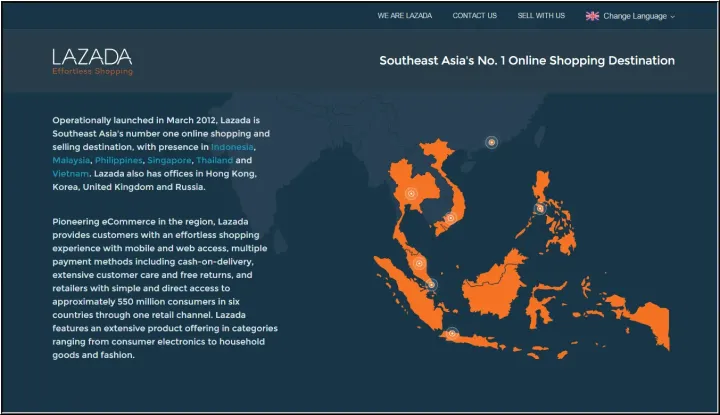
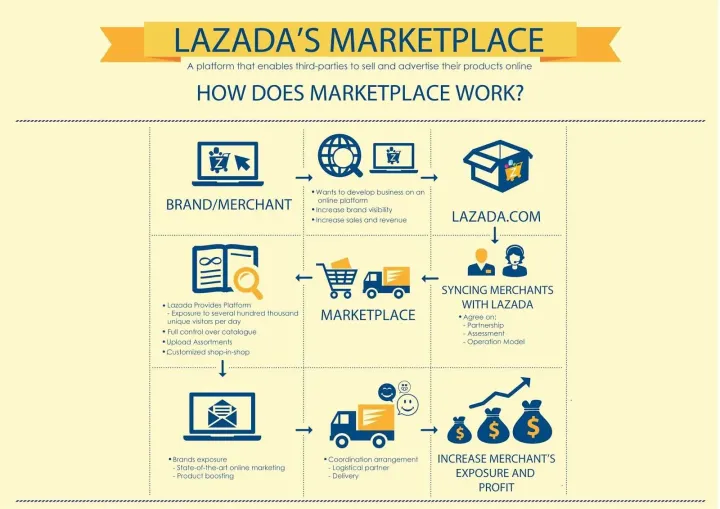
Before the eCommerce giant LAZADA tackled the payment and logistics bottleneck, occupying Singapore, Malaysia, Indonesia, Philippines, Thailand, Vietnam, 6 main SEA markets in 4 years with 40 thousand sellers and a transaction of 1.3 billion, these countries’ logistics services hadn’t been ready yet in early 2012.
Take LAZADA as an example, with more than 15,000 seller on their platform, its volume of transaction has reached 1.4 billion in 2014, which is almost 4 times greater than 2013.
After Uber sold China operation to rival Didi Chuxing, Uber now shifting its focus away from China to other overseas markets ensued. Southeast Asia become the next region for Uber that may better overcome local occupants.
After the mounting losses battle with lucrative commissions and deep discounts offered in China Market, the ride-hailing giants warfare ended with a M&A deal. Although it stopped almost $1B losses in Uber per year, the origin revenue model is still not steady and appropriate.
According to a questionnaire survey by Market Intelligence & Consulting Institute in Taiwan (MIC), in connection with the problem faced while operating cross-border e-commerce, statistics show that obstacles within the top ranks such as, normal payment or logistics problems, information flow problem including customer profile analysis and after-sales service, and so on.
Founded in 2010, Ensogo was one of the most promising e-commerce startups around Southeast Asia. Accompanied with increasing popularity and stable financials, the agile and smooth expansion to Philippines and Indonesia further marked its outstanding performance. Everything seemed bright and clear for the regional consolidation of Ensogo.
As a mother with young kids to take care of, finding a part-time job seems to be the best choice to ease the burden of one’s household expense. However, it isn’t as easy as one expects. A typical part-time job usually requires more than four hours in a regular shift. Additionally, bringing kids to the workplace is usually not allowed. The rigidity of the job compels most mothers to quit, forcing them to become isolated from society.
“In such a highly connected and competitive landscape today, we believe that innovation is key for companies to stay ahead of the game,” says Shopee CEO Chris Feng. As the buyout of Lazada by Chinese giant Alibaba struck the tentative balance in Southeast Asia, many are desperately wondering what the future of e-commerce in this region would be. Among all the predictions, there is only one thing for certain —the B2C marketplace, undoubtedly, is going to be under the control of the alliance.
Although Lazada is widely criticized by some entrepreneurs because of uncreative strategies — implement viable business model in unreclaimed regions, it is undeniable that the milestones it made are really surprising and exciting.
Due to changes in lifestyle in urban areas across Southeast Asia, more local residents are becoming conscious of the importance of a healthy lifestyle. But, it comes with a stressful lifestyle and a working environment which deters them from eating consistently healthy.
This week, there was a gathering event in Taiwan. The topic was focused on business and cross-border e-commerce in Southeast Asia. The attendees could be roughly categorized into logistics providers, platform owners and product in charge. Most of them have more than five-year experience in running business there.
On March 31, a balmy sunny day, Garena, one of the most promising and Singapore-based startups, made an announcement of $170M series D funding from Malaysian government’s strategic investment fund. It’s estimated that the valuation of the internet company reaches nearly 3.80 billion, a conservative projection figure. Unsurprisingly, these continuously instilling funding help Garena squeezed out other startups to become the most valuable unicorn in Southeast Asia.
Marketing campaigns, whether the online and offline ones, is a critical way to deliver company message to potential prospects and, then, turn them into frequent customers. While the offline marketing campaign is well studied and practiced, the online one seems ignored and lack of attention.
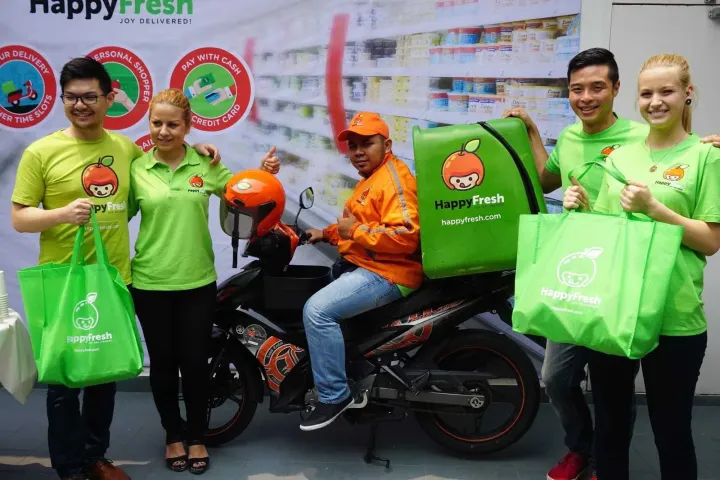
“What we are doing is to put a supermarket, Costco for example, just inside your house. We know our customers need this service and that’s why we are here,” says Ronald Chan, Managing Director of HappyFresh Taiwan.
While some claims Southeast Asia is a confusing region with segmented geographical and complicated cultural issues, it is actually not as difficult as one imagines to understand Internet user’s behavior. Southeast Asian, like any other people in different corner of the world, crave for cheaper price and better customer experience.
Since the alliance of Southeast Asia countries a few years ago, the huge domestic demands in these emerging markets has caught the attention from all over the world. This phenomenon is even lifted with increasing mobile penetration and an addiction on social networks, such as Facebook and Instagram. Southeast Asia, nowadays, is absolutely no longer as undeveloped as one’s stereotypical bias.
With boutique e-commerce overcoming logistical and customer behaviour barriers and building credibility years ago, people are becoming accustomed to place orders digitally and gaining desire for more convenience with a single click on the mouse. More categories ranging from electronic devices to groceries are available in the market; even fresh food experiences growing popularity among businesses with supporting infrastructures such as insulated storing box.
When it comes to Thailand, what is the first thing coming out your mind? Well, it could be the prosperous tourism, sacred buddha and spicy but tasty street food. Unsurprisingly, that is our stereotypical thoughts. However, there is one thing one often neglect — the potential to be a hot spot of E-Commerce in Southeast Asia.
One of the most shocking news this week should be the “Shutter of Rakuten in Southeast Asia ” , causing a stream of suspicion and critiques. In an official statement, Rakuten didn’t explain too detailed about the decision, simply indicating this was part of the corporate vision which is externally known as “Vision 2020”.